Discovering Your Skin Tone Code: An Extensive Guide on Skin Color Charts
Skin tone charts can be quite surprising!
Do you remember your first attempt at identifying your skin type in terms of the palette? I do, as mine was pretty stereotypical – "light", "medium" or "dark". But now I see that such classification is quite superficial and far from being true. The thing is, when talking about skin color, we have to take into consideration not only its visible part, but also the properties lying beneath.
In fact, that's why skin tone charts are so useful – they allow us to categorize the great variety of human skin colors, while at the same time helping us to become aware of the necessity to apply some protective measures in order to avoid certain problems related to one's skin type.
This is really a system which allows us to determine not only the visible shade of our skin, but also its other properties. Such knowledge is fundamental, as it allows us to make the right decision when it comes to selecting a cosmetic product or choosing the colors which will complement our outfit. Let's go through the main characteristics.
The Fitzpatrick Scale: Diary of Your Skin's Sun Exposure
One of the most popular skin tone charts, particularly in the field of medicine and dermatology, is undoubtedly the Fitzpatrick scale. The scale was invented in 1975 by Dr. Thomas B. Fitzpatrick, and its main function is to evaluate the reaction of certain skin tones to ultraviolet radiation. It is not the matter of skin tone per se but rather of the ability of the skin to either burn or tan under the effect of UV. What makes me love this scale is the special attention it pays to individual needs of each particular skin type in terms of sun exposure.
Type I: For example, my skin tone belongs to Type I. It is very fair, sometimes with red or blond hair and blue eyes. Our skins always burn and never tan.
Type II: These skin types are also pale, but perhaps with some golden undertones. Burning easily and getting a minimum tan are their typical features.
Type III: And finally, Type III. This is the one called 'cream to light olive.' We might burn occasionally but are also able to get a light tan.
Type IV: People with moderately brown skin usually belong here. We burn less but tan easily to become moderately brown. Complexions such as Mediterranean or Asian are good examples of this category.
Type V: Dark brown skin belongs to this category. We seldom get burnt but tan easily and well. Picture of perfect skin which simply absorbs sun's energy with no difficulties.
Type VI: The darkest skin, which does not burn at all but tans easily and deeply. This skin type contains the largest amounts of melanin providing great sun protection naturally.
To know your Fitzpatrick type is not only about knowledge but also about your sun protection strategy. Knowing that you have Types I and II means that you will definitely need more sunscreen than those people with Types V and VI. However, even those people should be careful as the protection from the nature does not mean total protection from the sun damage or skin cancer!
Skin undertones beyond the surface level
The Fitzpatrick Scale gives us a great baseline from a medical point of view. However, in order to choose clothes and makeup, one should dig even deeper. What are skin undertones? Your skin undertone is the color of your skin underneath the skin.
You cannot influence your skin undertone as you would normally influence surface skin color which becomes darkened due to tanning or blushed. As far as I'm concerned, I was completely lost when it came to finding the right foundation or clothes that suited me until I learned about undertones – that was an eye-opener!
Undertones can be categorized into three main groups:
1. Warm Undertones
Warm undertones mean that you have a peachy, golden or yellow undertone underneath your skin color. The people who have warm undertones have green or hazel eyes and blonde, red or brown hair. In my opinion, such people look really well in gold jewelry and tan very easily getting a golden-brown complexion.
2. Cool Undertones
Whereas cool undertones imply a pink, red or bluish tint. Think of that rosy tint! People with cool undertones usually have blue, grey, or purple tones in their veins (more about that later), and silver jewelry complements their skin very well. If they get a tan, it is a red-brown one, or they will only burn rather than getting a tan.
3. Neutral Undertones
Neutrals, oh neutrals! If you combine both warm and cool or if none seem to win, you are most likely a neutral. Your skin doesn't have strong yellow or pink tints; it is just balanced. We neutrals can wear both gold and silver jewelry, and we usually tan pretty well, evenly.
Undertones - How Do I Figure It Out?
Well, let's find out what test is for you:
The Vein Test – Take a look at the veins on the inside of your wrists in natural light conditions. If they look greenish, then you most probably have warm undertones. Blue or purple color means that you have cool undertones. And in case if you have mixed or cannot clearly determine your color – most probably you have neutral undertones.
The White Paper Test – Hold a pure white paper near your bare face (without any makeup). Then, under natural light condition, if your skin looks more yellowish or golden next to the paper, then your undertones are warm. Pink or rose color means that your undertones are cool. If there is no visible color difference between your face and the paper, most probably your undertones are neutral.
The Jewelry Test – Do you prefer wearing gold jewelry or silver? Gold jewelry will make your skin look brighter and healthier in case of warm undertones. Silver jewelry is perfect for those people who have cool undertones. And if you feel comfortable and beautiful wearing both kinds of jewelry, then most probably you have neutral undertones.
Sun Reaction Test – Are you tanning easily and never getting burned? You could be considered a warm skinned individual. In case you burn easily, but find it difficult to tan and if the tans you get have a reddish touch, then you must be a cool-skinned person.
Why Is All That Important? Real Life Application!
Now why is it important to know your skin tone and undertone? Well, it has many practical advantages which you will appreciate once you get to know your skin tone well enough.
1. Makeup Selection Made Easy
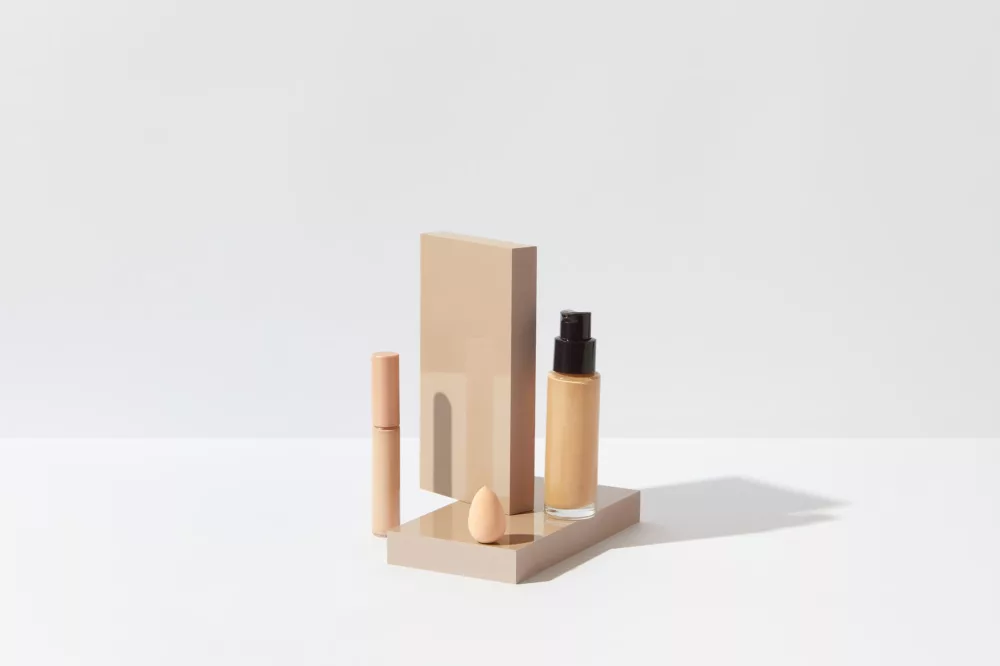
If there is one area where you would definitely notice the difference that knowledge of undertones gives, it is the application of makeup. It is quite a task to select a perfect foundation, isn't it? But now that you have your undertone known, it's a lot easier. People with a warm undertone should go for foundations based on yellow or golden tones, while those with a cool undertone should use pink or red-based ones. As for the neutrals, you're luckier, but still neutral shades give the best results.
2. Skincare and Treatment Options
Though undertone doesn't determine your skincare products in the same way that skin type – oily, dry or combination – does, having information about the general skin tone may help you make your decision. There are types of hyperpigmentation and sensitivity that occur more often in certain skin tones. Moreover, being aware of your Fitzpatrick skin type is important for determining how you would react to some specific treatments such as laser treatments and chemical peels.
3. Sun Damage Prevention
As we have already seen from discussing the Fitzpatrick Scale, your natural skin tone matters a lot when it comes to sun sensitivity. People with light skin, who tend to burn easily, know that they need more SPF and more frequent re-application of sunscreen and should stay in the shade. But even people with dark skin color, who possess more melanin in their skin, can be subjected to the effects of UV radiation and skin cancer.
4. Fashion & Choice of Hair Color
Ever put on a shirt but found yourself not liking it despite enjoying the color of the shirt on the hanger? How about dyeing your hair just to find out that it does not look right? Well, this all has a lot to do with your skin undertone! Individuals with warm undertones generally look great in earthy colors, green, orange, yellow, and warm red. Cool undertones tend to look great in blue, purple, emerald green, and jewel tones. For neutral tones, there is always room to explore everything! Same applies to hair color – cool tone blonde may suit an individual with pink undertones but will wash out golden skin tone.
Bottom Line: Celebrate YOUR Unique Shade!
Just as a reminder, this color chart is simply there to be used as a guide, not a confining box. Humans have extremely unique and varied skin tones and come in a wide spectrum. What I hope to accomplish by sharing all of this information is helping you learn more about YOUR unique skin tone and what looks best on YOU. Now that you know what kind of Fitzpatrick skin type and undertone YOU have, you will be able to take care of YOUR skin the best way possible. So now go ahead and use this newfound information on YOUR beautiful skin!
About Editorial Team
Senior columnist and culture critic specializing in architectural designs, emerging high-growth systems, and contemporary philosophies.