Sinuous Style: My Obsession with Snake Skin Boots
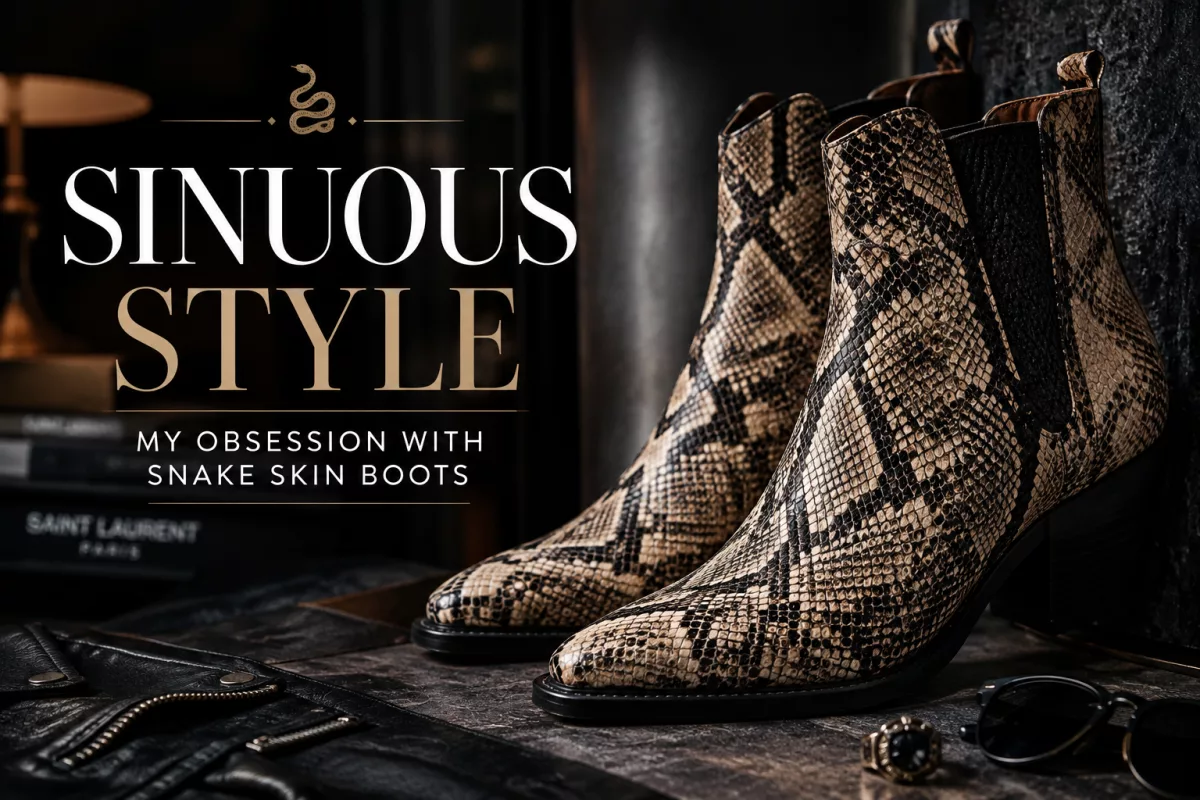
Isn’t there just something special about snake skin boots? Well, for me, they’re not just shoes but rather an accessory that is a masterpiece of art in its own way and a little bit more than a conversation starter as well. As far as I remember, I first fell in love with them years ago, perhaps when I saw a really beautiful pair at some vintage store. Just how that light played with the scales, the unmistakable texture of it – I couldn’t resist.
A Walk Through Time: The Sinuous Story of Snake Skin Boots
Can you believe how long their history is, really? Centuries, people, not just a mere fad. Exotic leather skins have been a sign of status and power for many centuries already. However, what made their heyday in footwear history? Many things can be linked to cowboys who tried various unique materials in their equipment. Next stop is the middle of the 20th century and rock 'n' roll stars completely adopt them.
Think about Jim Morrison, Elvis Presley, as well as all the future rock 'n' roll gods and rebellious fashion stars. Not only did they wear them but they brought their whole vibe with them. It was all about rebellion and confidence – the two qualities that were embodied by snakes themselves. For me, this historical background makes them even more interesting.
The Scales of Distinction: What Type of Snake Are We Talking About?
When you think about "snake skin boots," you may think one thing, but I tell you that you have got no idea how wide the difference is between the types of snakes out there! It is not just "snake skin," but rather there are distinctions in their pattern, scale size and even strength and durability. So, it would be great to know the difference in order to choose the right boots for yourself:
Python: It must be noted that this type is among the most popular snake skins on the market now. The reason is that the scales of pythons are usually large and symmetrical, therefore making them very impressive and interesting in their patterns. They are also often brightly dyed, resulting in really unusual boots. In my opinion, they have a particularly smooth texture, as if the snakeskin was polished. Usually, the pythons are farmed snakeskins.
Rattlesnake: Well, rattlesnake is a completely different story. Its scales are smaller and tougher, and those iconic diamonds on them are just hard to miss. Rattlesnake boots have this rugged, Western look that I simply love. This texture is not only rough, but also very tactile, and it looks great once it wears well with age.
Cobra: Cobra leather is shiny, with bigger and smoother scales than rattlesnake one, and it usually has this very eye-catching glossy look. Patterns can be very vivid, particularly belly scales. To my mind, cobra leather is just incredibly luxurious to touch, and it suits the elegant boots perfectly.
Sea Snake: Not as common as the previous two, but no less interesting, the sea snake has very small and even scales. It is very soft and flexible, and it is great to wear in the boot. In addition, it has very few patterns, and thus it highlights texture perfectly.
It is interesting how designers play with these features in their boots.
The Art of Bootmaking: Creating the Perfect Pair
To make such boots is not quite the same as making a normal leather boot. As far as I can see, it is a special kind of work which requires special skill and love for doing it. I have always admired the art of creating such boots. Firstly, skins should be chosen carefully. Not only are they put into a pile, but each piece of leather is checked for its quality, pattern, and any special details which may be found there. The leather should then be carefully processed through the tanning procedure which is extremely important.
But when tanning is completed, the bootmakers prove themselves true geniuses. To start with, cutting of snake skin is no simple task at all. Because of unique scale patterns, each individual piece has to be cut with great care, often by hand, so that there would be no disruption in the pattern when putting the pieces together. Just think how complicated it must be to match the scales along the toe cap or the shaft of the boot. It takes time to last and stitch the pieces of leather. All these things are done with such skill that only a professional would do them.
Showing Off Your Snake Skin Boots
So, now we get to the good stuff, right? Well, how do you manage to wear such gorgeous shoes and not end up resembling a Halloween monster? My rule of thumb is pretty straightforward: make the shoes take the lead. They're meant to be an eye-catching item, and you don't want to distract from them. In terms of a casual look, I would wear my snake skin boots with dark wash jeans, either skinny or straight cut, depending on the height of the boot, and a black or white tee.
If you want to add a touch of sophistication: Give them a shot with some tailored pants and a button-down shirt. In my opinion, an all-black outfit will make these boots really stand out in this case.
For the ladies: I absolutely love how these boots work with a plain black midi dress or a skirt. This way, you'll be able to add a touch of rock spirit to your overall feminine look. Just think of a flowy fabric and a reptilian texture.
Rock spirit: Black jeans, leather jacket, and band t-shirt is a great combo.
In general, you should try not to limit yourself and feel free to experiment. Once you know how to wear them properly, they can be quite versatile and can turn a regular outfit into something unique. Even some people manage to look cool in these boots with shorts.
Maintaining Their Purity: My Tips for Maintenance
Let me tell you now, you cannot just put them in a drawer and expect them to remain perfect on their own. You need to give them some TLC in order to ensure that they remain pure, and believe me, they are more than worthy of it all! As I have mentioned before, maintaining them will help preserve their purity for years to come.
Here are my tips for maintaining them:
Cleaning: Do not use any kind of chemical solutions or leather cleaning creams. Just use a slightly moist cloth to remove any dirt. Make sure to wipe along the grain of the scales and not against them, as this can lift them. Tougher spots can be cleaned with a very soft brush such as an old toothbrush.
Conditioning: This is important because the skin can become too dry causing lifting and cracking of the scales. For conditioning, I use an exotic leather conditioner that comes as either a cream or an oil and is applied sparingly using a soft cloth following the lines of the scales. Allow it to absorb and then gently buff using a dry cloth. Repeat this every few months or more often depending on how dry your environment is or how often you wear them.
Storage: These should be stored in a cool dry place away from any kind of heat source or direct sunlight. I always store my boots on boot trees so that their shape can be maintained. If they came with dust bags, then make sure to use them to keep them away from dust and scratches.
Water: This is one of the most important things for these boots because snake skin doesn’t go well with water especially rain or puddles. In case your boots get wet, allow them to dry naturally without putting them near heat and condition them afterward.
With some care, these beautiful boots will last you a lifetime.
The Ethics of Exotics and Their Alternatives
Isn't it crucial to be aware of where these skins come from? Certainly, this is a problem that concerns me very much. Ethical sourcing must not be ignored. Reputable manufacturers of boots will follow all the rules set by CITES (Convention on International Trade in Endangered Species of Wild Fauna and Flora), which guarantees the legal and sustainable sourcing of skins. Most of the python skins, for instance, originate from licensed farms where pythons are bred specifically for their skins. I always make sure to ask about such information when searching for a good pair of boots.
If, however, you do not wish to buy a pair of genuine snake skin boots or have difficulty finding one, there is a vast variety of alternatives. Contemporary technologies enable the manufacturing of synthetic snake skin which looks exactly like real skin. There is quite a range of high-quality faux snakeskin boots which offer a similar aesthetics but avoid all the ethical questions that come up when buying an exotic product.
Why I Keep Coming Back: The Timeless Appeal
Truly, for me, there is something so powerful about a really awesome pair of snake skin boots. There is just that certain aura of cool that comes from them that is hard to find in other types of clothing. It is a statement item and something that allows you to show off your more daring side and make a commitment to fashion. It doesn't matter whether it is their history, their unbelievable construction, or even just the look that makes you fall in love, but one thing is for sure and that is their undeniable appeal. Everyone should have the opportunity to rock a pair of these amazing pieces at least once in their lifetime.
About Editorial Team
Senior columnist and culture critic specializing in architectural designs, emerging high-growth systems, and contemporary philosophies.