Goodyear: A Century of Innovation, Pushing the Boundaries of Mobility
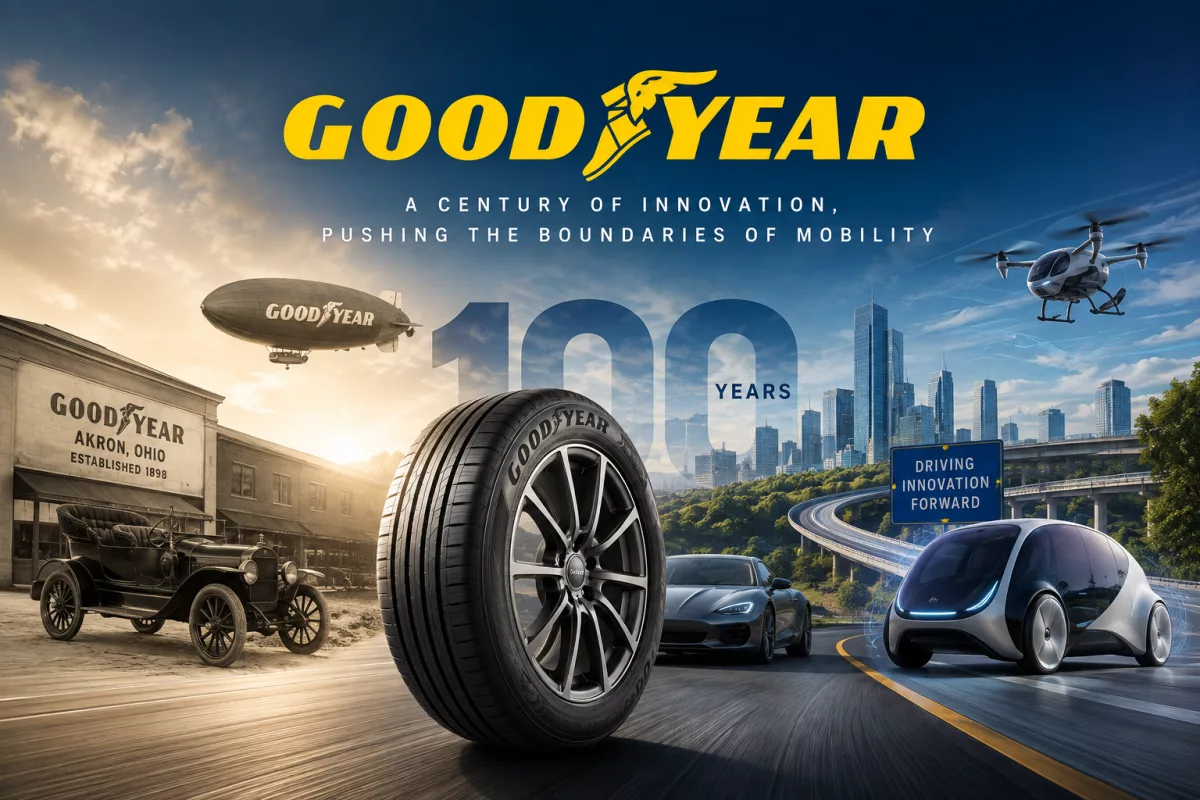
Legacy of Goodyear: A Lot More than Just Rubber and Tires
Whenever I think of Goodyear, a few things come to mind – the majestic blimp soaring above the game, the distinctive winged foot logo, and of course the tires that Goodyear manufactures. But what I've discovered and would like to talk about is the fact that this brand carries a lot more weight in terms of history than rubber and tires. This is a very long story of brilliant inventions and engineering accomplishments, which go back well over a hundred years now.
I have always been interested in companies, which manage to not only survive but thrive during different industrial revolutions and changes in economy. Goodyear is one such example. The thing is that Goodyear is not simply a tire manufacturer. This is a company, which was actually defining a whole industry. Starting in Akron, Ohio, this company didn't simply produce tires, but changed our transportation methods and created new technologies. Goodyear was established at the times when automobiles were something of a luxury rather than an absolute necessity.
The Roots of Goodyear: The Beginnings
Now let us travel back in time and recall how Goodyear became Goodyear. The founder of the Goodyear Tire & Rubber Company was a person named Frank Seiberling, who established his company in 1898. Frank gave the name of his company to one of the most important persons in rubber history - Charles Goodyear, who many years ago discovered the technology of vulcanization – that is a real revolution, which turned raw rubber into a really useful material. Thanks to Charles Goodyear's discovery, Frank Seiberling could create his company, and even the whole rubber industry wouldn't exist at all.
Seiberling opened his company with just several employees and at first produced bicycle and carriage tires, as well as horseshoe pads and rubber stoppers. At that time, there was no automobile industry as such, but Seiberling could predict what great prospects this industry will have in the future. And to realize these perspectives, he made a right step: Goodyear supplied tires to Ford Motor Company of Henry Ford.
Diversification and Globalization
What I find especially intriguing about the history of Goodyear is that it embraced diversification from the very beginning. They were not satisfied with making tires for cars only. During the First World War, they diversified their products by manufacturing aircraft tires and producing airships.
This is not just a short-term project that the company undertook; Goodyear was one of the leaders in lighter-than-air technologies and produced such famous objects as USS Macon and Akron for the US Navy in the 1930s. By the way, the Goodyear Blimp that many people recognize is the result of their rich history of involvement in aviation.
By the beginning of the 1920s, Goodyear became a true international corporation. They set up production facilities in Canada, England, and Australia. I think it was one of the ways how to be prepared for the future.
Tire Technology: The Never-Ending Quest for Advancement
For me, it is important to mention that Goodyear has always been on the leading edge in terms of developing new technologies in the realm of tire design and production. Considering that the tires are the only parts of a vehicle that come into contact with the road, they need to be efficient, durable and reliable enough. This is why there have been many innovations made by Goodyear.
Radial Tires: Although Michelin is famous for inventing radial tires, Goodyear played an important role in refining this technology and making it popular on the American market thanks to its R&D work. Indeed, the radial tires were much better than their predecessors - bias ply tires in terms of handling, fuel consumption and lifespan of the tire itself.
Run-Flat Technology: I clearly remember how run-flat tires were introduced. Thanks to the innovations of Goodyear such as EMT, the drivers were able to continue their travel after their tires became flat.
Sustainable Solutions: It has become increasingly important to consider sustainability over the last few years. Goodyear has also kept up with the trend by investigating sustainable raw material sources. For instance, they have already started using soybean oil instead of petroleum in tire compounds. It is necessary to think of such solutions for a modern business organization.
Intelligent Tires: In the future, I think that the idea of intelligent tires will be very popular. Goodyear is creating a tire that is equipped with sensors which measure parameters like pressure, temperature, and wear of treads. This way, people get useful data concerning their cars.
The Thrill of Motorsports
It is impossible to discuss Goodyear without talking about motorsports. For many years, Goodyear has been known for success in various motor racing competitions. Whether in NASCAR, Formula 1 racing, or even at Le Mans, the tires of many successful vehicles have always been from Goodyear. I believe that this is more than just marketing for Goodyear. It is an important platform for testing and development. In racing competitions, tires experience very tough conditions, and this allows Goodyear to obtain useful information which eventually helps them to design and manufacture better tires for normal cars.
Adjustment to New Challenges and Future Prospects
Like any other established company, Goodyear had to overcome many difficulties throughout its history. From tough competition to volatile raw material prices and recessions, from the necessity to innovate to changes in the industry itself, Goodyear has been adapting all the time. It is amazing how they manage to adjust to changes and keep investing in R&D.
The modern world is experiencing an evolution of the automotive industry because of electric vehicles (EVs) and self-driving cars. The challenges brought by this innovation include a need to develop tires which could support those needs. EVs are usually heavier and produce instant torque, so special tires need to be created. Goodyear has already started developing tires which would work specifically well with EVs, providing low resistance for more range and durability. My perspective is that Goodyear will succeed in coping with those new requirements.
Therefore, Goodyear's story does not only tell us about its history but is a lesson on how to survive and continue leading through innovative approach and constant adjustment. What makes Goodyear special is their understanding of their core business – they provide essential contact between vehicles and the road surface.
About Editorial Team
Senior columnist and culture critic specializing in architectural designs, emerging high-growth systems, and contemporary philosophies.